Home›Ingredients›Gymnema Sylvestre
Ingredient 3 of 14
Gymnema Sylvestre In GlycoAid
The only ingredient on this entire panel whose presence you can verify yourself, in about sixty seconds, without a laboratory.
Gymnema Sylvestre: Source And Background
Gymnema sylvestre is a woody climbing vine from the forests of India, Africa and Australia. Its Hindi name, gurmar, translates as sugar destroyer, and that name is about two thousand years old.
The active compounds are gymnemic acids, a group of saponins concentrated in the leaf. Extracts are usually standardised to a gymnemic acid percentage, commonly 25 or 75 per cent, and that percentage matters far more than the raw milligram figure.
It is the oldest name on this label by a wide margin, and unlike most traditional ingredients it has a mechanism that is genuinely well understood.
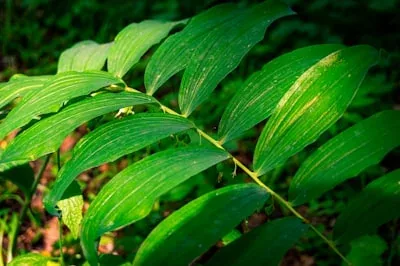
One of fourteen names inside the 500 mg GlycoAid blend
Verdict: Strong for the sweet-taste effect. Weak to moderate for glucose itself.
Its Job In What Is GlycoAid
Gymnemic acids are shaped closely enough to glucose to occupy the sweet receptors on your tongue. While they are sitting there, sugar cannot bind, and sweet food tastes of almost nothing — texture without flavour. The effect lasts between about thirty minutes and two hours.
That is a real, immediate, reproducible effect and it is the single most testable thing on this label. There is a second proposed mechanism involving the same receptors in the intestine and reduced sugar absorption, which is much less established.
On this panel it works the appetite side alongside Bitter Melon, another bitter plant with a similar reputation, and Banaba Leaf, which targets the meal itself rather than the craving.
How Good Is The Evidence?
Sweet taste suppression: strong. Not a clinical claim so much as a demonstrable fact. You can prove it on yourself in a minute.
Sugar cravings: moderate. Follows logically from the taste effect and is supported by small studies, most of them measuring self-reported desire rather than intake.
Fasting glucose and HbA1c: weak to moderate. Small trials, several from the same research groups, generally reporting modest improvements. The methodology is not strong enough to build a purchase on.
Read gymnema as an appetite ingredient with a glucose footnote, rather than the other way round.
Dose, Timing And What Is Printed
Studies use 200 to 400 mg a day of an extract standardised to gymnemic acids, sometimes more. That is one of the few doses on this whole label a 500 mg blend could genuinely carry.
Whether it does is a different question, and the panel does not answer it. The one clue available is the ordering: proprietary blend ingredients are listed heaviest first, so where gymnema appears in that list tells you something.
The sixty-second test. Open one capsule onto your tongue, let it sit for thirty seconds, then eat something sweet ten minutes later. If the sweetness has gone flat and hollow, there is working gymnema in the bottle. If sugar tastes exactly as usual, that is worth knowing on day one rather than week six.
Who Should Check First
Glucose medication. Gymnema is one of the three names here most likely to add to a medicine that already lowers blood sugar. Supervision, not a decision from a website.
Low blood sugar history. Anyone who has had hypoglycaemic episodes should be equally careful.
Pregnancy and breastfeeding. Not enough safety data. Avoid.
Surgery. Stop a fortnight beforehand, which is the standard instruction for anything that affects glucose.
Two Claims This Is Not
Not an appetite suppressant. It does not reduce hunger. It removes the reward from sweet food for an hour, which is a narrower and more believable thing.
Not a licence to eat sugar. Blocking the taste does not block the calories.
This is not medical advice. Any prescription, pregnancy, breastfeeding or diagnosed condition means a word with a doctor or pharmacist before a first capsule. Every interaction worth raising is tabulated on the safety page.
Gymnema Sylvestre: What People Ask
What readers want to know about this name in particular.
Does gymnema really block sweet taste?
Yes, and you can prove it on yourself. Gymnemic acids occupy the sweet receptors on the tongue for roughly thirty minutes to two hours.
Will it stop me wanting sugar?
For the hour or so the taste effect lasts, sweet food is much less rewarding, and less of it tends to get eaten. Beyond that window it does nothing about a habit.
Does gymnema lower blood sugar?
The trials are small and mostly from a handful of research groups. They report modest improvements, and the methodology is not strong enough to rely on.
How much gymnema does GlycoAid contain?
Not printed. It is one of the few ingredients here whose research dose a 500 mg blend could realistically carry, but the label gives no figure either way.
The Remaining Thirteen
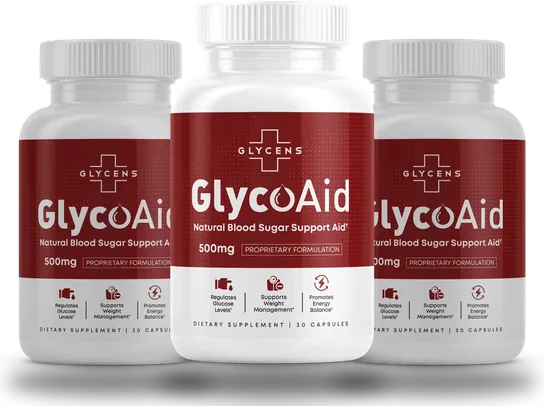
GlycoAid: Fourteen Names, One Capsule A Day
One capsule with a meal, a page for every name on the label, and sixty days to send it back if it does nothing.
- One capsule a day, taken with food
- Fourteen names, every one with its own page here
- Free US delivery on the 3 and 6 bottle packs
- Sixty days to send it back, opened bottles included