Berberine
The most researched plant compound in the formula, included for its role in how cells take up glucose.
Verdict: Strong on its own at trial doses. Almost certainly under-dosed inside a 500 mg blend.
Official GlycoAid Website•60-Day Money-Back Guarantee•Free US Shipping On 3 & 6 Bottle Packs
Fourteen names share a single 500 mg blend. Two are settled nutrition, three have genuine research behind them, four are weak, and one carries a published safety ceiling. This is which is which.
Fourteen ingredients sounds generous. On a supplement panel it usually means the opposite, because the more names share one weight, the less of each there can be.
GlycoAid declares a proprietary blend of 500 mg. That is the total for all fourteen. No individual amount is printed for any botanical, so no individual dose can be checked against the doses the research used. That single fact does more to explain this product than anything else on the label, and it comes first for a reason.
How to read any supplement panel in a minute. Start with the serving size, because a headline figure that assumes two capsules is half as impressive if you take one. Then work out which ingredients carry their own number and which share a blend. Then compare those numbers against the doses the published trials used. Most products fail at step two, and the arithmetic for this one is on the blend arithmetic page.
Chromium and biotin are micronutrients measured in micrograms, and micrograms take up almost no room. Both will normally carry a percent daily value on the panel even inside a proprietary blend, because vitamins and minerals are declared differently from botanicals.
So on this label there are two figures you can actually check, and twelve you cannot. Those two are worth reading.
Each one follows the same order: where the ingredient comes from, what job it is doing in this particular formula, how strong the human evidence is, what dose the research used, who should check first, and two claims the ingredient is not.
Click any name for the full page behind the summary.
The most researched plant compound in the formula, included for its role in how cells take up glucose.
Verdict: Strong on its own at trial doses. Almost certainly under-dosed inside a 500 mg blend.
A kitchen spice with a long research record around the post-meal glucose curve.
Verdict: Weak to moderate for glucose. One genuine safety caveat depending on the species.
The sugar destroyer — the one ingredient whose effect you can notice within minutes.
Verdict: Strong for the sweet-taste effect. Weak to moderate for glucose itself.
A tropical leaf standardised for corosolic acid, studied for post-meal glucose support.
Verdict: Moderate, and unusually plausible at this dose. Standardisation is everything.
A daily food across Asia and the Caribbean, and a traditional support for glucose balance.
Verdict: Weak to moderate. The trials disagree and the doses are large.
A compound the body makes itself, valued for its antioxidant role in nerve and cell health.
Verdict: Strong for neuropathy at 600 mg. Weak for glucose. Not deliverable at this blend size.
An essential trace mineral with a recognised role in normal macronutrient metabolism.
Verdict: Strong as nutrition. Modest and disputed for glucose or cravings.
Vitamin B7, essential for turning carbohydrate, fat and protein into usable energy.
Verdict: Strong as nutrition. The test interference matters far more than the vitamin does.
Its DNJ compound works on the gut enzyme that breaks starch down into simple sugar.
Verdict: Weak to moderate for post-meal glucose. The mechanism is better than the evidence.
Curcumin, the golden compound behind one of the most studied plants in the world.
Verdict: Moderate as an anti-inflammatory at proper doses. Weak here, and poorly absorbed.
A traditional European berry, long used in folk practice and rich in plant polyphenols.
Verdict: Weak. Traditional use, animal studies, and very little human evidence.
A high-altitude Peruvian root eaten for centuries for everyday stamina and energy.
Verdict: Moderate for energy and mood. No meaningful glucose evidence at all.
A bright red berry from Ningxia, carrying carotenoids and antioxidant polyphenols.
Verdict: Strong as antioxidant nutrition. Weak for glucose. One real interaction.
A classic soothing root used for digestive comfort, included at a supporting amount.
Verdict: Weak for glucose. The safety ceiling is the reason this page exists.
| Ingredient | As it appears on the panel | Verdict |
|---|---|---|
| Berberine | Berberine | Strong on its own at trial doses. Almost certainly under-dosed inside a 500 mg blend. |
| Cinnamon Bark | Cinnamon (Cinnamomum) bark | Weak to moderate for glucose. One genuine safety caveat depending on the species. |
| Gymnema Sylvestre | Gymnema sylvestre leaf | Strong for the sweet-taste effect. Weak to moderate for glucose itself. |
| Banaba Leaf | Banaba (Lagerstroemia speciosa) leaf | Moderate, and unusually plausible at this dose. Standardisation is everything. |
| Bitter Melon | Bitter melon (Momordica charantia) fruit | Weak to moderate. The trials disagree and the doses are large. |
| Alpha-Lipoic Acid | Alpha-lipoic acid | Strong for neuropathy at 600 mg. Weak for glucose. Not deliverable at this blend size. |
| Chromium | Chromium | Strong as nutrition. Modest and disputed for glucose or cravings. |
| Biotin | Biotin | Strong as nutrition. The test interference matters far more than the vitamin does. |
| White Mulberry Leaf | White mulberry (Morus alba) leaf | Weak to moderate for post-meal glucose. The mechanism is better than the evidence. |
| Turmeric Root | Turmeric (Curcuma longa) root | Moderate as an anti-inflammatory at proper doses. Weak here, and poorly absorbed. |
| Juniper Berry | Juniper (Juniperus communis) berry | Weak. Traditional use, animal studies, and very little human evidence. |
| Maca Root | Maca (Lepidium meyenii) root | Moderate for energy and mood. No meaningful glucose evidence at all. |
| Goji Berry | Goji (Lycium barbarum) berry | Strong as antioxidant nutrition. Weak for glucose. One real interaction. |
| Licorice Root | Licorice (Glycyrrhiza glabra) root | Weak for glucose. The safety ceiling is the reason this page exists. |
Worth noting, because absence is information. There is no caffeine, no ephedra, no synephrine, no yohimbine and no undeclared stimulant blend — the things that turn up in FDA warning letters about metabolic products. For a category this crowded, a clean stimulant record is a genuine point in this formula’s favour.
There is also no black pepper extract, which matters more than it sounds: piperine is the standard fix for turmeric’s absorption problem, and without it the turmeric here is working uphill.
For the mechanisms rather than the list, read inside the blend. For timing and the first month, the capsule routine. To check this against something already in your cupboard, safety and medication.
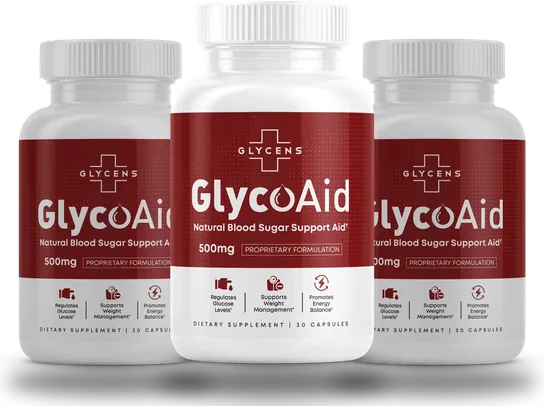
One capsule with a meal, a page for every name on the label, and sixty days to send it back if it does nothing.