Short Version
Glycemic index ranks how fast a fixed 50 g of carbohydrate from a food raises glucose. Glycemic load multiplies that by how much carbohydrate is actually in a normal portion. GL is the more useful number, because nobody eats 50 g of carbohydrate worth of watermelon.
What Glycemic Index Measures
GI is a laboratory ranking. Volunteers eat a portion of a food containing exactly 50 grams of available carbohydrate, their glucose is measured over two hours, and the area under that curve is compared against pure glucose scored at 100.
Under 55 is low, 56 to 69 is medium, 70 and above is high. Those bands are widely quoted.
The problem is buried in the method. Fifty grams of available carbohydrate is a normal serving of rice. From watermelon it is about seven hundred grams of fruit, which is most of a melon and not something anyone eats in a sitting.
What Glycemic Load Adds
GL corrects for that by scaling GI to a realistic portion. The formula is simple:
GL = (GI × grams of carbohydrate in your portion) ÷ 100
Under 10 is low, 11 to 19 is medium, 20 and above is high.
Run watermelon through it. GI 76, which is high. A 120 gram slice contains about 9 grams of carbohydrate. So GL = 76 × 9 ÷ 100 = 6.8, which is low.
That single calculation explains why GI lists confuse people. Watermelon is not a problem food. The number just answered a question nobody asked.
Where They Disagree Most
| Food | GI | Typical portion | GL | Reads as |
|---|---|---|---|---|
| Watermelon | 76 (high) | 120 g slice | 7 | Low |
| Carrots, boiled | 39 (low) | 80 g | 2 | Low |
| Popcorn | 65 (medium) | 20 g | 7 | Low |
| White rice | 73 (high) | 150 g cooked | 29 | High |
| Baked potato | 85 (high) | 150 g | 26 | High |
| Wholemeal bread | 74 (high) | 30 g slice | 9 | Low |
| Apple | 36 (low) | 120 g | 5 | Low |
Note wholemeal bread. Its GI is high, which surprises people, and its GL per slice is low because a slice is small. Both facts are true and only one of them is useful.
Four Things Both Numbers Miss
- What else is on the plate. Fat, protein and fibre all slow gastric emptying. The GI of bread eaten with butter and eggs is not the GI of bread eaten alone.
- How it was cooked and cooled. Pasta cooked firm has a lower GI than pasta cooked soft. Potatoes cooled after cooking form resistant starch and behave differently.
- Individual variation. Continuous monitoring studies have found that two people can respond very differently to the same food, consistently. The published GI is a group average.
- Nutrition generally. Chocolate has a moderate GI. That does not make it a health food, and a low number is not a licence.
How To Actually Use This
- Use GL, not GI. If you only remember one thing from this page, that is it.
- Look at the carbohydrate portion first. Portion size usually matters more than the ranking, because GL is mostly driven by grams.
- Eat the carbohydrate with something else. Protein, fat and fibre alongside it flatten the curve more reliably than swapping to a lower-GI version of the same food.
- Change the order. Vegetables and protein before the starch produces a measurably lower peak from the identical plate.
- Test yourself if you care enough. A cheap meter and a repeated meal will tell you more about your own response than any published table.
Where a supplement fits. Two ingredients on this label — Banaba Leaf and White Mulberry Leaf — partially inhibit the enzyme that digests starch, which is a pharmacological version of what a lower glycemic load does mechanically. The food change is free, larger and better established. The capsule is an addition to it, not a substitute.
Questions On This Article
What readers ask after reading it.
What is the difference between GI and GL?
GI ranks how fast a fixed 50 g of carbohydrate raises glucose. GL scales that by how much carbohydrate is in a real portion, which is why it is the more useful number.
How do you calculate glycemic load?
Multiply the food's GI by the grams of carbohydrate in your portion, then divide by 100. Under 10 is low, 20 and above is high.
Why does watermelon have a high GI but low GL?
Because 50 g of carbohydrate from watermelon is about seven hundred grams of fruit. A normal slice contains around nine grams, so the realistic load is small.
Does cooking change the glycemic index?
Yes. Pasta cooked firm is lower than pasta cooked soft, and potatoes cooled after cooking form resistant starch and behave differently.
Is a low GI diet worth following?
Glycemic load is the more practical version, and both are less powerful than portion size, meal composition and eating order. Use it as one input rather than a system.
Three More Articles
Ingredients Named Above
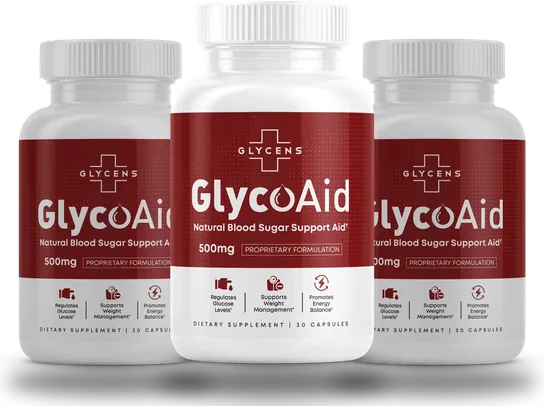
Order Your GlycoAid Today
One capsule with a meal, a page for every name on the label, and sixty days to send it back if it does nothing.
- One capsule a day, taken with food
- Fourteen names, every one with its own page here
- Free US delivery on the 3 and 6 bottle packs
- Sixty days to send it back, opened bottles included